Good Families Fight Too: How to Argue in Ways That Actually Pull You Closer
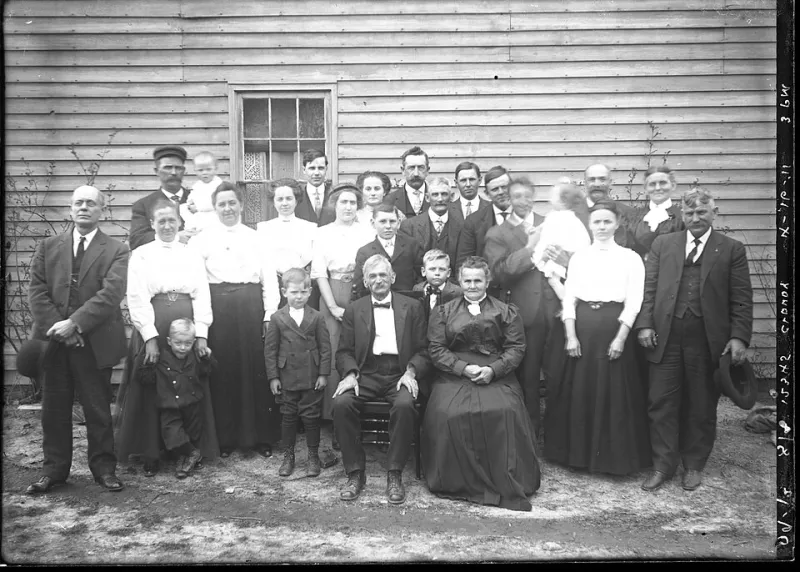
Photo: Warner, Marion G., 1861-1922, Public domain, via Wikimedia Commons
Let's be honest. Every family argues. The question isn't whether your family will ever disagree — it's whether you'll come out the other side with something better than what you had before.
Most of us were raised to believe that a peaceful house was a happy house. Keep the volume down. Change the subject. Smile through the awkward dinner. And while that approach might keep the evening civil, it has a way of quietly building walls between people who genuinely love each other. Unspoken frustrations don't vanish — they just find sneakier ways to show up later.
The truth is, the families who fight well are often the families who stick together hardest. Learning to disagree without doing damage is one of the most underrated skills a family can build together — and it's never too late to start.
Why Avoiding Conflict Actually Costs You
There's a reason so many families tiptoe around certain topics. Grandpa's political opinions. The teenager who won't talk at dinner. The sibling rivalry that's been simmering since 1998. When those things get avoided long enough, they don't fade — they become off-limits zones, and off-limits zones shrink the space where real connection can happen.
Research from family therapy consistently shows that families who can openly address tension tend to report higher levels of trust and emotional closeness. Not because they argue constantly, but because everyone knows that if something comes up, it won't blow the whole thing apart. That kind of security is what lets people actually be themselves around each other.
Conflict avoidance, on the other hand, often signals that people don't feel safe enough to be honest. And a family where nobody feels safe enough to be honest isn't really as peaceful as it looks — it's just quiet.
The Difference Between Fighting and Damaging
Here's where a lot of families get tangled up: they confuse having a real argument with causing real harm. Those are not the same thing.
A good family argument is about an issue. A damaging one is about a person. The moment someone shifts from "I don't agree with that decision" to "you never think things through," the conversation has left the realm of productive disagreement and entered something else entirely.
The goal isn't to win. It's to understand — and ideally, to be understood in return. That reframe alone can completely change how a conversation feels, even when nobody's backing down.
A Simple Framework That Actually Works
You don't need a therapist in the room to have a healthy argument. You just need a few ground rules that everyone agrees to before things get heated — not during, and definitely not after.
Name the issue, not the person. Start with what's bothering you, not who's bothering you. "I felt dismissed when my idea got shot down at dinner" lands very differently than "you never listen to me."
Let everyone finish. This sounds obvious, but it's incredibly hard in practice, especially across generations. Older family members sometimes interrupt out of habit. Younger ones check out when they feel unheard. Make finishing your sentence a non-negotiable — even if it takes a beat of uncomfortable silence to get there.
Ask before you assume. Half of most family arguments are based on what someone thinks the other person meant. A simple "help me understand what you meant by that" can defuse a situation before it escalates.
Take a break if you need one — but come back. Walking away to cool down is healthy. Walking away and never returning to the conversation is just avoidance with better timing. If someone needs a pause, name it: "I need twenty minutes and then I want to finish this." Then actually finish it.
End with something real. You don't have to reach full agreement. You do have to reach some kind of landing — even if it's just acknowledging that you both care enough to have had the conversation at all.
When Generations Are on Opposite Sides
Some of the richest — and most frustrating — family arguments happen across generational lines. A boomer parent and a Gen Z kid are not just disagreeing about curfew or screen time. They're often speaking from entirely different frameworks about autonomy, respect, and how the world works.
The trick here isn't to make one side convert the other. It's to stay curious long enough to actually hear where the other person is coming from. A grandparent who grew up in a household where children were seen and not heard isn't being dismissive on purpose — they're working from a script that was handed to them decades ago. A teenager who pushes back on every rule isn't being disrespectful — they're often trying to establish a sense of self in the only way they know how.
When both sides can say "I hear that this matters to you, even if I don't fully get it yet," something shifts. It doesn't resolve everything, but it opens a door.
The Argument That Makes You Closer
There's a particular kind of family fight that doesn't get talked about enough — the one that feels awful in the moment and then, somehow, becomes one of the stories you tell at Thanksgiving twenty years later. The one where someone finally said the thing that needed to be said, and the family survived it, and everyone quietly understood each other a little better afterward.
That kind of argument is a gift. It's proof that your family is strong enough to hold the truth.
Not every disagreement will be that meaningful, of course. Some arguments are just about whose turn it is to unload the dishwasher, and they'll stay exactly that petty. But the way you handle even those small moments builds the muscle memory for the harder conversations down the road.
Start Before You Have To
The best time to talk about how your family handles conflict is when nobody's actually in conflict. A relaxed Sunday afternoon. A long drive. A dinner where nothing's on fire yet.
You don't have to frame it as a big serious meeting. It can be as simple as: "Hey, I want us to be able to talk about hard stuff without it turning into a whole thing. What would make that easier for you?"
That question alone — asked with genuine curiosity — can start a conversation that changes how your family operates for years.
Disagreement isn't the enemy of closeness. Handled with care, it might just be one of the most honest ways to love each other.