One Room, Six Decades: 12 Ideas That Don't Fall Apart When the Whole Family Shows Up
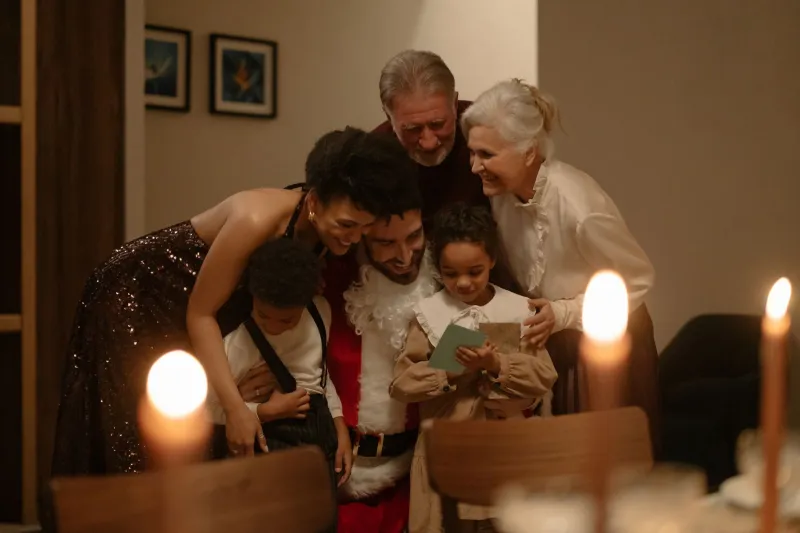
Photo: multigenerational family playing board game at table, grandparents and children laughing together at home, via m.media-amazon.com
Every family gathering has that moment. The kids drift toward a screen, the grandparents settle into the good chairs, and the middle generation huddles in the kitchen pretending to be busy with the dip. Nobody planned the split. It happens because most activities are designed for one age bracket and quietly fall apart for everyone else.
So we ran a test. Not a lab-coat kind of test — more of a four-generation, dishes-in-the-sink, somebody's-nephew-won't-stop-talking kind of test. The question was simple: what actually works when the youngest person in the room is six and the oldest is eighty-six?
Here are twelve ideas that passed. Each one gets graded on access (can everyone physically join?), budget (what it costs in dollars and prep time), and awkwardness (how forced the first five minutes feel).
How to Read the Grades
High access means a grandparent in a chair and a toddler on a lap can both take part. Low access means stairs, standing for long stretches, or fine motor skills are baked in. Budget is a rough read on out-of-pocket cost. Awkwardness is honest: some of the best ideas start stiff and warm up fast, and pretending otherwise doesn't help anybody.
Outings That Don't Leave Anyone Behind
1. The Everyone-Picks-A-Turn Walk. Pick a paved trail, a park loop, or six blocks of a downtown you all know. At each corner, a different person chooses the direction. Access: high. Budget: free. Awkwardness: low, because walking gives people something to do while they talk. Pack a folding stool for anyone who needs a mid-walk rest, and cap the route so the six-year-old's legs outlast it.
2. The Two-Hour Museum Dash. Not the whole museum — one wing, two hours, one shared snack afterward. Most US museums lend wheelchairs and keep benches in every gallery, so access runs high. Budget: moderate, though many cities still offer free or reduced admission days. Hand the teenager the phone camera and the youngest the paper map, and the pecking order solves itself.
3. The Pick-Your-Own Afternoon. Orchards in fall, berries in late spring, pumpkins when the calendar turns. Call ahead about wheelchair-accessible rows and wagon rides. Budget: low to moderate, and the harvest doubles as dessert. Nobody has to be good at this. That is the entire appeal.
Games That Scale Up and Down
4. Tiered Trivia. Write questions in three piles — one for the kids, one for general knowledge, one marked only-if-you-were-alive-in-1974. Let teams draft one player from each generation. Access: high. Budget: free. Awkwardness: medium until the first disputed answer, then it's a party.
5. Rummikub or Five Crowns. Both are simple to teach, quick to play, and forgiving of a player who needs a reminder. Large-print editions exist. Budget: around fifteen dollars. Awkwardness: low. Rotate partners every round so nobody gets stuck losing to the same cousin all night.
6. Big-Money Bingo. Dollar-store prizes, cards marked with daubers, pens, or a helper's hand. Access: high, including for guests with limited vision if you call numbers slowly and repeat them. Budget: low. Awkwardness: essentially zero, which makes it the safest opener in this entire list.
7. The Story Bowl. Everyone writes three short memories on slips of paper and drops them in a bowl. Draw one at a time; whoever wrote it tells the story. Non-writers can dictate to a helper. Budget: free. Awkwardness: low, and it climbs into genuinely good territory by the fourth slip.
8. Charades With a Seated Round. Half the prompts must be acted while sitting down, which levels the field for grandparents and lets the kids discover that physical comedy has no age limit. Access: high. Budget: free. Awkwardness: very high for about ninety seconds, and then everyone is equally ridiculous, which is the point.
Openers That Get Past 'Fine'
9. The Photo Pull. Bring a shoebox of prints or pull a folder up on a phone. Each person picks one image and says what they remember about it. Access: high — pass the phone; do not narrate the screen. Awkwardness: low, because a photo does the first half of the talking.
10. First Job, First Car, First Concert. Three questions, answered oldest to youngest. The six-year-old's first concert is usually a school assembly, and that contrast is the whole charm. Best played over food, not in a circle of silent faces.
11. Two Truths and a Lie, Family Edition. Everyone writes three statements, two real, one invented. The twist: no statements about anyone else in the room, only about yourself. It keeps the game funny instead of pointed.
12. The Year You Were Ten. Ask each person to describe the holiday meal, the music, and the price of a gallon of milk from the year they turned ten. Grandparents light up. Teenagers realize the world used to look different. Somebody always learns something they didn't know about their own parent.
Adapting Without Making It Weird
For mobility, keep seating in the circle rather than at the edges, and put the longest activity at the start of the day when energy is highest. For hearing, seat the soft-spoken person directly beside the hard-of-hearing guest instead of shouting across the room — it spares everyone the awkward repeat. For attention spans, run two games in parallel instead of one long one. Twenty minutes, then a break, then something new beats a single two-hour tournament every time.
And adapt quietly. Announcing an accommodation out loud turns a guest into a topic of conversation. Handing someone a large-print card and moving on does not.
The Rule That Beats All Twelve
End on time. The gathering that runs forty minutes past its natural finish is the one people remember as exhausting, no matter how good the bingo was. Call the last round, hand out the prizes, and let the good mood be the thing everyone drives home with. Every generation gets the same gift then: a memory that ended while it was still fun.