Put It in Writing: Why More Families Are Creating Their Own Rulebooks — and Why Yours Should Too
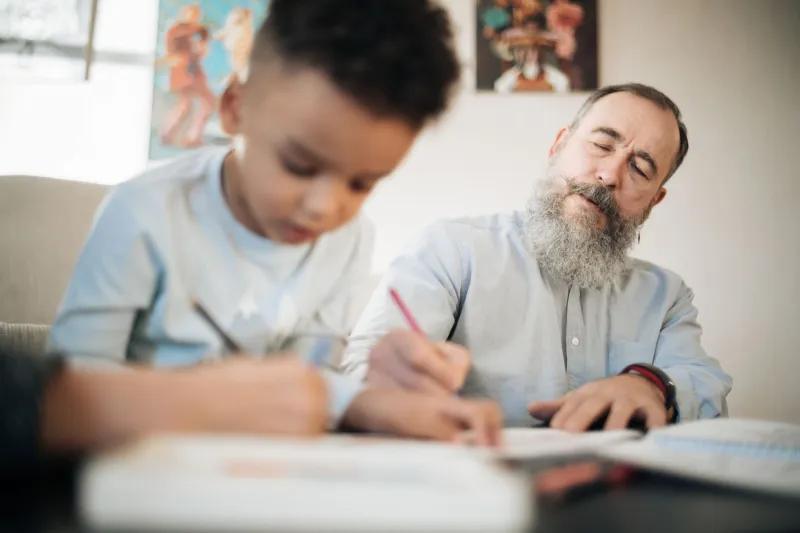
Somewhere between the family group chat and the holiday dinner table, a lot of important stuff just... gets lost. The values your grandmother quietly modeled. The way your parents handled conflict without ever explaining why it worked. The little traditions that somehow stuck around without anyone deciding they should.
Now imagine all of that actually written down. Not in a dusty journal nobody reads, but in something alive — a family handbook that every generation helped create and every member actually owns.
It sounds a little formal, maybe even a little corporate. But families across the country are discovering that putting their culture into words isn't stiff or weird. It's actually one of the most connective things they've ever done together.
So What Exactly Is a Family Handbook?
Think of it less like a legal document and more like a love letter with structure. Some families call it a family constitution. Others go with a values guide, a family playbook, or simply "our book." Whatever the name, the idea is the same: a written record of who your family is, what you believe in, how you make decisions, and what traditions you want to carry forward.
It's not a chore chart. It's not a list of rules posted on the fridge. It's something deeper — a living document that answers questions like What do we do when things get hard? What does this family actually stand for? What do we want the grandkids to know about us someday?
The content looks different for every household. Some families focus heavily on values — honesty, loyalty, generosity, resilience. Others build their handbook around traditions, documenting exactly how Thanksgiving works in their house or why they always road trip to the same state park every July Fourth. Many include a section on how the family handles disagreements, which turns out to be one of the most useful parts of all.
Why Writing It Down Changes Everything
Here's the thing about unspoken family culture: it's incredibly fragile. When values and traditions only exist in people's heads and habits, they're one generation away from disappearing entirely. Kids grow up and move out. Grandparents pass on. The way things were "just understood" suddenly isn't understood anymore.
Putting it in writing does something powerful. It transforms vague feelings into shared language. When a family sits down and tries to articulate why they prioritize Sunday dinners or what they actually mean by "we take care of each other," those values stop being background noise and start being something real that everyone can point to.
It also creates a kind of pre-emptive peace treaty. Families that document their decision-making processes — how they handle money disagreements, how they navigate big life changes, how they include everyone's voice — tend to have fewer blow-ups when those situations actually arrive. The conversation already happened. The groundwork is already laid.
And for younger members of the family? It's a compass. Teenagers especially are at a stage where they're actively figuring out who they are. Having a tangible record of where they come from — the values, the stories, the why behind the family they grew up in — gives them something to push against, lean into, or return to later in life.
Getting Every Generation in the Room
One of the best parts of building a family handbook is that it genuinely works as a multigenerational project. This isn't something the adults hand down to the kids. It's something everyone builds together, and every age group brings something essential to the table.
Grandparents are the obvious history keepers. They hold the origin stories — where the family came from, what hardships shaped earlier generations, which traditions were passed down and which ones they invented themselves. Sitting with them and asking "what do you want us to remember?" can open up conversations that never would have happened otherwise.
Parents tend to be the connective tissue. They're translating the older generation's wisdom into something that works for the world their kids are actually living in. They're the ones who know which traditions still fit and which ones need updating.
Kids and teenagers, though, bring something nobody else can: honesty. They'll tell you which family values feel real and which ones feel performative. They'll push back on things that don't make sense to them, which forces the whole family to actually think through why they do what they do. That friction is a feature, not a bug.
Even younger children can participate in simple ways — drawing pictures of their favorite family traditions, answering questions like "what makes our family special?" — and seeing their contributions included in the final document gives them a sense of ownership that sticks.
How to Actually Start
The blank page is the hardest part, so don't start there. Start with a conversation — maybe over dinner, maybe on a long drive, maybe during a lazy weekend afternoon. Ask a few open-ended questions and just listen.
Some good starting points:
- What's one thing you hope our family never stops doing?
- How do we want to handle it when we disagree about something big?
- What's a story about our family that you think everyone should know?
- What does it mean to be part of this family?
Take notes. Don't worry about format yet. Just collect the raw material.
From there, you can organize things into loose sections: values, traditions, how we handle conflict, family history, and maybe a section called something like "things we believe" that captures the spirit of how your household operates.
The format can be as simple or as polished as you want. Some families type it up and print it out. Others keep a shared Google Doc that gets updated over time. Some go all-in with a bound notebook that lives on the bookshelf next to the photo albums. There's no wrong answer — the point is that it exists and that everyone had a hand in it.
A Document That Grows With You
The best family handbooks aren't finished. They're updated when new people join the family, when circumstances change, when kids grow up and bring their own perspectives back to the table. Revisiting it together every year or two — maybe over a holiday or at a family gathering — becomes its own tradition.
And someday, when your kids are grown and starting their own households, they'll have something concrete to reference. Not just a feeling of "this is how we did things," but an actual record of the people who raised them and what they stood for.
That's not a small thing. That's a legacy.
So maybe this is the year your family finally puts it in writing — not because things are falling apart, but because what you have together is worth keeping.