The One Who Remembers Everything: Inside the Quiet Role of the Family Memory Keeper
Photo: Wilfredor, CC0, via Wikimedia Commons
There's always one. Maybe it's your aunt who shows up to every reunion with a laminated photo timeline nobody asked for but everyone secretly loves. Maybe it's your dad, the guy who can tell you exactly what the weather was like the day your parents brought your older sister home from the hospital. Maybe — and you might be reading this with a slow, knowing nod — it's you.
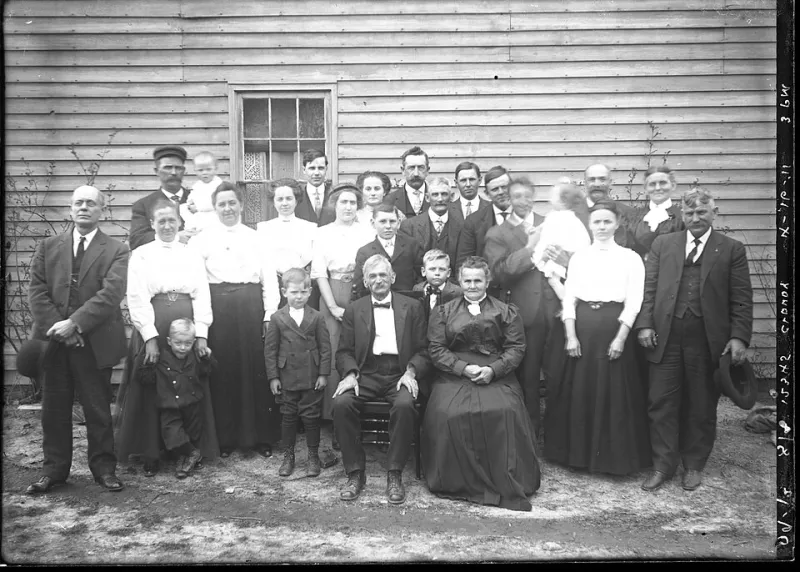
In families across the country, someone quietly assumes a role that never appears on any job description: the family historian. The memory keeper. The archivist of ordinary moments. And while the rest of the family is busy living life, this person is busy saving it.
It's one of the most meaningful things a person can do for the people they love. It's also, if we're being honest, a lot.
How It Starts (Usually Without Anyone Noticing)
The role rarely begins with intention. More often, it creeps in through small, almost invisible moments. You're the one who thought to pull out a camera at Thanksgiving when everyone else was focused on the food. You're the one who asked Grandpa to tell that story about his first job — and then asked him to tell it again, slower, so you could write it down. You're the one who saved the birthday cards.
Researchers who study family systems have long observed that families naturally develop what sociologists call functional roles — informal positions that help the group operate and stay cohesive. The memory keeper is one of the most powerful of these roles because it directly shapes how a family understands itself over time. The stories you preserve become the stories your family tells. And the stories a family tells become the foundation of its identity.
But here's what's interesting: the person who steps into this role often shares a few common traits. They tend to be deeply emotionally attuned. They feel the weight of time passing in a way others might not. And they genuinely believe — sometimes without ever articulating it — that if they don't hold onto these things, nobody will.
That last part? That's where it gets complicated.
The Weight That Comes With the Scrapbook
There's real emotional labor embedded in being the family's keeper of memories. It means being the one who tracks down relatives for old photos before a grandparent's milestone birthday. It means digitizing shoeboxes of slides that have been sitting in someone's attic since 1987. It means being the person everyone calls when they can't remember what year something happened — and feeling quietly responsible when you don't know the answer.
It can also mean carrying grief in a way others don't. When a family elder passes, the memory keeper often feels the loss on two levels: the personal one, and the archival one. Who will remember the things only they knew? That's a particular kind of sorrow that doesn't get talked about much.
And then there's the unspoken expectation. Once the family knows you're the one who cares about this stuff, the assumption quietly forms that you'll always be the one who cares about this stuff. The role can start to feel less like a passion and more like a permanent obligation.
Why It's Worth Embracing Anyway
Here's the other side of it, though: being the family historian is genuinely one of the most profound gifts you can give the people you love.
Studies on family narratives — including well-known research from Emory University — have consistently found that children who know their family stories demonstrate greater resilience, stronger self-esteem, and a more grounded sense of identity. The family history you're preserving isn't just nostalgia. It's infrastructure. It's the scaffolding that helps younger generations understand who they are and where they come from.
When you record your grandmother's voice telling a story, you're giving your grandchildren something they'll treasure in ways you can't yet imagine. When you label the backs of old photographs with names and dates, you're preventing a future family member from staring at a stranger's face and wondering. When you write down the weird little details — the fact that your dad always burned the grilled cheese, that your mom had a specific laugh she saved only for bad puns — you're keeping someone real for people who will never get to meet them.
That matters. A lot.
How to Share the Load Without Losing the Heart of It
If you're the memory keeper in your family and you're starting to feel the weight, here's the most liberating thing you can hear: you don't have to do this alone.
Start small conversations, not big projects. Instead of announcing a family history initiative that feels like a homework assignment, try weaving questions into existing moments. Road trips, holiday dinners, and lazy Sunday afternoons are natural openings. "Hey, what do you remember about the house you grew up in?" is a lot more inviting than a formal interview.
Assign specific jobs, not vague intentions. If you want your siblings or cousins to contribute, give them something concrete. Ask one person to collect photos from their branch of the family. Ask another to write down three memories of a grandparent while they're still vivid. Specificity makes participation feel manageable.
Create a shared space. A private family Google Photos album, a shared folder on Dropbox, even a group text thread dedicated to old memories — these low-barrier tools make it easy for others to contribute without needing a designated archivist to coordinate everything.
Let others tell their own versions. One of the quiet tensions in the memory keeper role is the temptation to be the official narrator — the one whose version of events becomes the family record. Resist that. Ask your relatives to record voice memos, write their own accounts, or annotate photos in their own words. The richness is in the multiplicity of perspectives, not the single authoritative voice.
Give yourself permission to set it down sometimes. The archive will still be there tomorrow. You are allowed to just be at the family reunion without documenting it. Presence is also preservation, in its own way.
An Invitation for Everyone Else
If you're reading this and you're not the family historian — if you're one of the people who benefits from someone else's quiet labor — this is your nudge. Say thank you. Actually say it out loud, specifically. "I love that you kept all of these. I don't think I ever told you how much it means to me." Those words cost nothing and mean everything.
And then ask how you can help. You might be surprised to find that the person who's been holding all the stories is quietly hoping someone will offer to hold a few of them too.
Every family has a memory keeper. The real question is whether the rest of the family sees them — really sees them — for what they do.
Start there. The rest tends to follow.