Set Another Plate: How to Open Your Friendsgiving to Someone Who Has Nowhere Else to Be
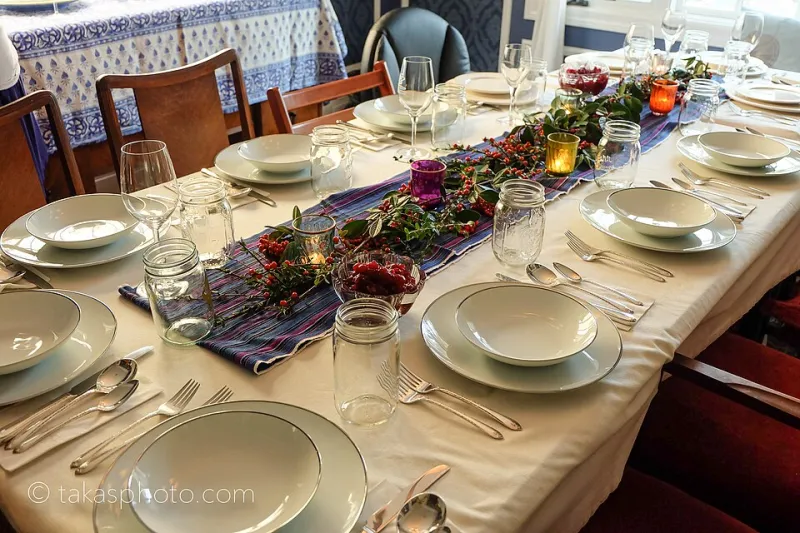
Photo: takasphoto.com, CC BY-SA 2.0, via Wikimedia Commons
Somewhere around early November, most families start doing the math on Thanksgiving. How many chairs, how many pies, which cousin is bringing the weird green thing again. Somewhere in that math, a smaller number gets quietly skipped: how many people we know who will spend the day alone.
Friendsgiving has grown into its own American tradition over the past decade, and it's usually framed as Thanksgiving for people whose families are far away or complicated. That framing is a little backwards. The best Friendsgiving tables aren't a substitute for family — they're an expansion of it. They're where the neighbor from down the hall and the college kid who couldn't afford a flight and the eighty-year-old widower from church end up passing the mashed potatoes to each other.
If you're hosting one this year, here's how to make room without making anyone feel like a charity case.
The Invitation Is the Hard Part
Most people who spend the holidays alone don't announce it. They wait to see if they're asked. So ask — specifically, and early, and with a plan attached.
A vague 'you should come by sometime' is easy to decline. A real invitation has a time, a place, and a role. Try this: 'We're doing Friendsgiving on Saturday the twenty-first, around four. Nothing fancy, twelve people, way too much food. I'd love it if you came. Bring nothing — we've got it.'
The role part matters more than it sounds. 'Bring nothing' can feel like being told you're a guest in the formal sense. Some people genuinely want a job. Offer one, and offer it as a choice: 'If you want to bring something, a bag of ice or a bottle of wine would be perfect.' Small, optional, easy to do.
And if the answer is no, take it the first time. Some people have traditions of their own, even quiet ones. A gracious 'the door's open if plans change' leaves things warmer than a second push.
Food: Keep It Familiar, Keep It Simple
Potluck is the natural format for a mixed-age Friendsgiving, but potlucks can be quietly stressful for a first-timer. Two fixes solve most of it.
First, assign categories rather than dishes. Ask for 'a side' or 'something to drink' instead of a specific recipe. People bring what they can afford and what they're good at, and nobody feels cornered into spending forty dollars on ingredients.
Second, make sure there's something soft and something plain. Multigenerational tables always have a guest who can't do spicy, a kid who won't touch anything green, and a grandparent managing salt. A pot of plain rice, a basket of rolls, and a dish of unseasoned vegetables quietly rescue three people at once.
If the guest is new to the country, you can also just ask — warmly and once — whether there's a food they'd love to see on the table or anything they'd rather skip. That question says 'we're glad you're here,' not 'please explain your diet.'
Seating That Doesn't Sort People by Age
Here's the most common mistake at multigenerational holiday tables: the kids get the card table, the oldest guests get the quiet end, and the newcomer gets the chair closest to the kitchen — in other words, alone with the serving spoons.
Mix it. Put the eight-year-old next to the seventy-eight-year-old and watch what happens. Seat the new guest between two people who are easy to talk to, not beside the host who will be up and down all night refilling glasses. If someone has mobility or hearing needs, place them where they can see faces without turning all the way around — and make that choice quietly, before anyone arrives.
One more small thing: name cards. Not elegant calligraphy, just index cards. They give a newcomer an instant map of the room and spare them the awkward 'and you are?' loop around the table.
Don't Make Them a Project
This is the trap. Sometimes a well-meaning host spends the whole evening checking in with the guest — are you okay, do you need anything, are you having fun — and turns a person into an assignment.
Instead, treat them like anyone else. Tease them if that's the house style. Ask their opinion on the pie ranking. Give them a turn in the game. If they want to talk about why they're alone this year, they will. If they don't, that's a story that doesn't need telling over dinner.
Two practical moves help more than any script: introduce them by name and with a detail ('this is Dev, he runs the coffee shop on Ninth and he's the reason my car smells like dark roast'), and hand them a second-round job nobody fails at, like lighting the candles or carrying the dessert tray.
When the Guest Is a Kid
If you're bringing a child or teen into the celebration, the details shift. Ask the parent or caregiver about allergies, bedtime, and whether the kid gets overwhelmed by noise. Have one activity ready that doesn't require reading the room — a bin of Legos, a coloring sheet, a simple card game.
And skip the spotlight. 'Tell everyone what your family does for Thanksgiving' is the kind of question that can land badly for a kid in foster care or a recently split household. Ask about their favorite holiday movie instead.
The Follow-Up Nobody Thinks About
The day after matters. A short text — 'so glad you came, the mashed potatoes were a hit' — turns one evening into an actual connection. If it went well, make a second plan casually and soon: coffee, a walk, a repeat invitation next month. Chosen family is built in the ordinary weeks, not just the big ones.
And if you can, keep the empty chair visible next year too. Once your table is known for having room, people start asking to sit at it — and that's about the best reputation a family holiday can have.