Hard Talks, Stronger Bonds: A Family's Honest Playbook for the Conversations Nobody Wants to Start
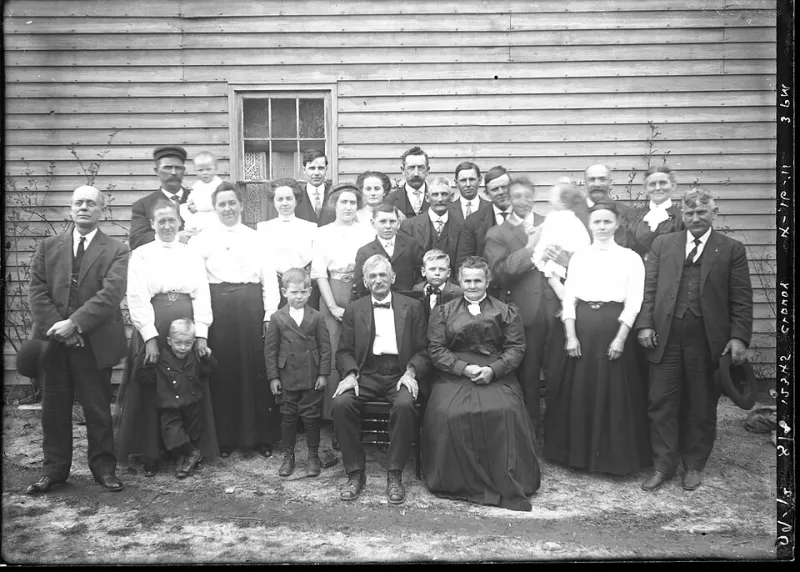
Photo: Warner, Marion G., 1861-1922, Public domain, via Wikimedia Commons
Picture it: Thanksgiving dinner, 2022. The turkey is perfect, the pie is cooling on the counter, and everyone is carefully, deliberately talking about nothing. The weather. The neighbor's new fence. Whether the Cowboys will make the playoffs. Meanwhile, the real stuff — Dad's health scare, the family home that needs a plan, the political elephant that's been in the room since 2016 — sits quietly at the table like an uninvited guest nobody will acknowledge.
Sound familiar? You're not alone.
Across American families, the conversations that matter most are often the ones that never quite happen. We tell ourselves we're waiting for the right moment, the right mood, the right opening. But the right moment, it turns out, rarely announces itself. You have to make it.
The good news? Families who do make it — who choose honesty over comfort, even imperfectly — almost universally report that those conversations became turning points. Not fractures. Turning points.
Why We Avoid the Hard Stuff (And What It Actually Costs Us)
Avoidance is deeply human. When a topic feels emotionally charged, our brains register it as a threat and steer us toward safer conversational ground. That's not weakness — that's wiring.
But in families, chronic avoidance has a price. Unspoken expectations fester into resentment. Financial misunderstandings between siblings become lasting rifts after a parent passes. Adult children make life decisions without knowing their parents' actual wishes. Aging parents quietly struggle rather than ask for help they desperately need.
A 2022 survey by Merrill Lynch found that 61% of Americans say they're more comfortable discussing their own death than their finances — yet both topics remain largely off-limits at the family dinner table. We've built a cultural norm around surface-level connection, and then we wonder why we feel lonely even surrounded by people we love.
"Avoidance doesn't protect relationships," says family therapist and author Renata Hollins, who leads workshops on multigenerational communication in Atlanta. "It just delays the damage. The conversation is going to happen eventually — either while everyone is alive and has a chance to respond with love, or after someone is gone and it's too late."
The Conversations That Actually Need to Happen
Every family is different, but certain topics tend to sit in the same uncomfortable drawer across households:
- Money and inheritance — who's getting what, who's contributing to what, and why
- Aging and care — what happens when Mom or Dad can no longer live independently
- End-of-life wishes — medical directives, funeral preferences, what "a good death" looks like
- Political and values differences — especially across generational lines
- Life plans and expectations — career changes, relocations, relationship choices that affect the whole family
- Family history and unresolved hurt — old wounds that quietly shape current dynamics
None of these are comfortable. All of them are necessary.
Setting the Table Before You Sit Down
Here's where the Food & Family Traditions connection becomes more than metaphorical. Think about how much care goes into preparing a meaningful family meal. You choose the menu thoughtfully. You set the table. You create a space that says this matters. Hard conversations deserve the same intentionality.
A few things that actually help:
Pick your moment deliberately. Don't ambush people. "Hey, can we find some time this weekend to talk about Dad's living situation?" gives everyone a chance to prepare emotionally. A surprise confrontation rarely ends well.
Start with curiosity, not conclusions. "I've been thinking about what happens if your health changes — can I ask what you're hoping for?" lands very differently than "We need to talk about what happens when you can't live alone anymore."
Normalize the awkwardness out loud. "I know this is a weird thing to bring up, but I love you and I'd rather talk about it together" is disarming. It names the discomfort and signals safety at the same time.
Use shared rituals as a container. The kitchen table, a Sunday walk, a road trip — familiar, low-stakes settings often make high-stakes conversations more accessible. There's a reason people say more in a car than in a conference room.
Real Families, Real Conversations
The Nguyen family in Sacramento had been quietly dreading the money talk for years. When the eldest daughter, Lily, 34, announced she was buying a house, her parents — first-generation Vietnamese immigrants who'd never openly discussed finances — suddenly realized that none of their three adult children knew anything about the family's financial situation or their wishes for the future.
"It started with me asking my mom for advice on mortgages," Lily says. "And somehow that turned into a three-hour conversation at the kitchen table that we'd needed to have for a decade." Her parents shared things they'd never said out loud — their fears about aging, their hope that the children would stay close, their quiet anxiety about being a burden. "We all cried. But afterward, my mom said she felt lighter than she had in years."
For the Hendersons in rural Tennessee, it was politics that had quietly fractured holiday gatherings for years. Rather than another silent standoff at Christmas, the family's matriarch, 74-year-old Ruth, proposed something radical: a structured dinner conversation where everyone had to explain why they believed what they believed — not just that they believed it.
"It wasn't about changing anyone's mind," Ruth says. "It was about remembering that these are people I love, not just positions I disagree with." The conversation was imperfect and occasionally tense. But it ended with her grandson — who disagrees with her on nearly everything politically — sitting beside her on the porch and holding her hand. "That," she says, "is what I was after."
Conversation Starters You Can Actually Use
Sometimes the hardest part is just the first sentence. Here are a few that families have found genuinely useful:
- "I've been thinking about what I'd want if something happened to me — can we talk about it?"
- "I want to understand your point of view better. Can you help me see how you got there?"
- "Is there anything about our family's finances I should understand before you need me to?"
- "What does aging well look like to you? What would you want us to know?"
- "I feel like there's something between us that we've never talked about. Am I imagining that?"
None of these are magic. But they're a beginning — and beginnings are what matter most.
The Other Side of the Hard Talk
Families who've had these conversations consistently describe the same thing on the other side: relief. A closeness they didn't expect. A sense that something real and permanent had been built between them.
Because that's what honesty does inside a family. It doesn't fracture the foundation — it pours the concrete. The families that talk about the hard things aren't the ones who never fight or never disagree. They're the ones who've decided that being close matters more than being comfortable.
At All Teb Family, we believe every generation has wisdom worth sharing and questions worth asking. Sometimes the most loving thing you can do for your family is simply start the conversation — imperfectly, nervously, with a little grace — and trust that the people around your table love you enough to meet you there.