Surprising Gifts That Actually Make Everyone Happy: Where Grandparents and Gen Z Finally See Eye to Eye

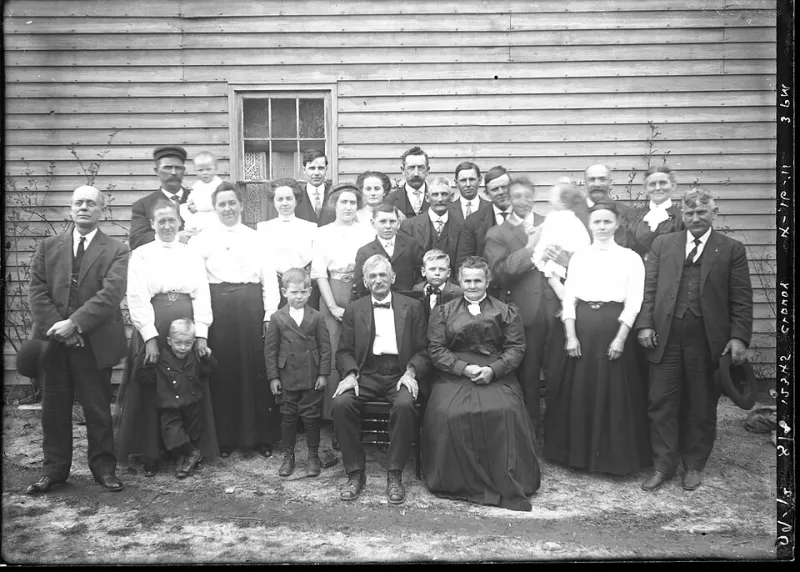
Photo: William Murphy from Dublin, Ireland, CC BY-SA 2.0, via Wikimedia Commons
Every holiday season, the same quiet tension plays out in living rooms across America. Grandma wants to give something meaningful. Her teenage grandkid quietly dreads another gift card to a store they've never heard of. Meanwhile, Gen Z is busy posting about "experience culture" on TikTok, and Grandpa is nodding along at the dinner table without quite knowing why.
Here's the twist nobody saw coming: they actually want the same thing.
After years of assumed generational conflict over gift-giving — stuff vs. experiences, practical vs. sentimental, Amazon wishlist vs. handwritten card — families are discovering that the oldest and youngest members often share the deepest common ground. They both want connection. They both want to feel seen. And more and more, they're both over the clutter.
The "Stuff" Fatigue Is Real — On Both Ends
Ask most grandparents what they actually want for their birthday, and you'll hear some version of the same answer: "Don't get me anything. I have too much already." Decades of accumulated living will do that. After a certain point, another sweater or decorative candle just adds to the pile.
Now flip to Gen Z. This generation — born roughly between 1997 and 2012 — grew up watching minimalism go viral, following sustainability influencers, and inheriting a cultural anxiety about consumerism. A 2023 survey by Eventbrite found that nearly 78% of millennials and Gen Z respondents prefer spending money on experiences over physical things. They're not just saying it for the aesthetic. They mean it.
So when 68-year-old Carol from Columbus, Ohio sat down with her 17-year-old granddaughter Mia to talk about what they actually wanted for the holidays last year, they were both a little shocked. "She said she wanted us to take a pottery class together," Carol recalls. "And I thought, that's exactly what I would have asked for."
Why the Middle Generation Gets Stuck in the Middle
If grandparents and Gen Z are on the same page, why does gift-giving still feel so complicated? Often, it's the parents — Gen X and older millennials — caught in the crossfire. They grew up in the golden age of stuff: the era of big-box store toy catalogs, elaborate Christmas morning hauls, and the belief that a generous gift meant a big gift.
Unlearning that isn't easy, especially when you're also the one coordinating family logistics, managing budgets, and trying to make everyone feel equally loved.
"I kept buying my mom these elaborate gift baskets," says Derek, a 44-year-old dad from Austin. "She'd smile, say thank you, and then I'd find them mostly untouched in her pantry three months later. She finally told me, 'Derek, I just want to come watch your kids' soccer games.' I felt terrible, but also — that's so much easier to give her."
What the Research (and Real Families) Are Saying
Gift-giving researchers have a term for what's happening here: the "experiential advantage." Studies from Cornell University and the Journal of Consumer Psychology consistently show that experiences produce more lasting happiness than material goods — across all age groups. The memory of doing something together outlasts the novelty of any object.
But here's what makes it especially powerful within families: shared experiences create shared memories. When 72-year-old Robert takes his grandkids to a Cubs game, he's not just giving them a fun afternoon. He's handing them a story they'll tell at his funeral someday — and that's not morbid, that's love made permanent.
Family therapist Dr. Lydia Marsh, who works with multigenerational households in the greater Chicago area, puts it plainly: "What I see in my practice is that people of all ages are hungry for presence. The gift that says 'I want to spend time with you specifically' hits differently than anything that comes in a box."
Practical Ideas That Bridge the Gap
So what does this actually look like when you're standing in the gift aisle in December with no idea what to buy? Here are a few approaches that tend to work across generations:
Skill swaps. Have Grandpa teach a grandkid to fish, bake his famous chili, or restore furniture. Have the teen teach Grandpa how to use Instagram Reels. Everyone leaves with something new — and a story.
Local experience vouchers. Think cooking classes, escape rooms, botanical garden memberships, or tickets to a local theater production. Many of these are surprisingly affordable and infinitely more memorable than another Amazon order.
"Date day" coupons. Handmade or printed cards that offer a specific shared experience — "good for one afternoon at the farmer's market" or "one movie night, your pick" — cost almost nothing and mean everything.
Family project contributions. Pooling gift money toward a family trip, a kitchen renovation, or even a shared streaming subscription can feel more meaningful than individual purchases that miss the mark.
Memory-making kits. A disposable camera, a blank journal, and a list of prompts for grandparent-grandchild conversations. Simple, cheap, and genuinely touching.
The Conversation Worth Having Before You Shop
Maybe the most radical gift-giving advice is the simplest: just ask. Before the holidays, before the birthday, before you default to the same tired routine — have the conversation. "What would actually make you happy this year?" is a question that opens doors most families don't even realize are closed.
Mia and Carol, the grandmother-granddaughter duo from Columbus, ended up taking that pottery class in February — technically after the holidays, but neither of them minded. The class ran six weeks. They drove together every Saturday morning. Carol made a lopsided bowl she's genuinely proud of. Mia has a new favorite memory of her grandmother that no Amazon Prime delivery could have created.
"It turns out we both just wanted more of each other," Carol says. "We just didn't know how to say that."
At All Teb Family, we believe the best gifts are the ones that bring people back to the same table — or the same pottery wheel, soccer field, or kitchen counter. And sometimes, all it takes is realizing you wanted the same thing all along.